

This Dr. Axe content is medically reviewed or fact checked to ensure factually accurate information.
With strict editorial sourcing guidelines, we only link to academic research institutions, reputable media sites and, when research is available, medically peer-reviewed studies. Note that the numbers in parentheses (1, 2, etc.) are clickable links to these studies.
The information in our articles is NOT intended to replace a one-on-one relationship with a qualified health care professional and is not intended as medical advice.
This article is based on scientific evidence, written by experts and fact checked by our trained editorial staff. Note that the numbers in parentheses (1, 2, etc.) are clickable links to medically peer-reviewed studies.
Our team includes licensed nutritionists and dietitians, certified health education specialists, as well as certified strength and conditioning specialists, personal trainers and corrective exercise specialists. Our team aims to be not only thorough with its research, but also objective and unbiased.
The information in our articles is NOT intended to replace a one-on-one relationship with a qualified health care professional and is not intended as medical advice.
12 Benefits of Limes You Won’t Believe + Lime Recipes You Can Enjoy
August 3, 2025

This incredible citrus fruit may seem pretty ordinary, but it’s actually a powerhouse of nutrition. Bursting with both vitamin C and antioxidants, limes, like lemons, possess a powerful set of health benefits.
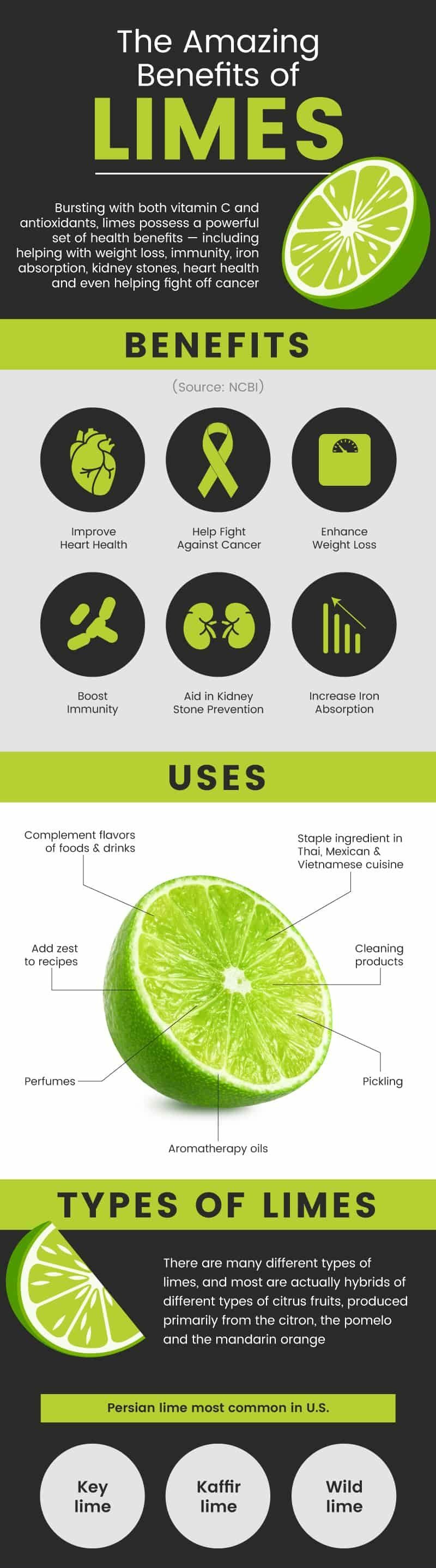
In fact, limes may be able to help amp up weight loss, enhance immunity, boost iron absorption, prevent kidney stones, improve heart health and even fight off cancer.
Best of all, this fruit is widely available and easy to add into your diet, making it the perfect way to give your health an easy upgrade with minimal effort required.
Nutrition facts
Limes are low in calories but contain a hearty dose of fiber and vitamin C.
One lime (about 67 grams) contains approximately:

- Calories: 20
- Total Carbohydrates: 7 g
- Fiber: 1.9 g
- Sugar: 1.1 g
- Total Fat: 0.1 g
- Saturated Fat: 0.02 g
- Polyunsaturated Fat: 0.04 g
- Monounsaturated Fat: 0.01 g
- Trans Fat: 0 g
- Protein: 0.5 g
- Sodium: 1.3 mg (0.1% DV)
- Vitamin C: 19.5 mg (22% DV)
- Calcium: 22.1 mg (2% DV)
- Iron: 0.4 mg (2% DV)
- Potassium: 68.3 mg (1.5% DV)
*Daily Value: Percentages are based on a diet of 2,000 calories a day.
In addition to the above nutrients, limes also contain a small amount of vitamin A, vitamin E, vitamin K, copper, magnesium and phosphorus.
Benefits
1. May improve heart health
Studies have shown that eating lime fruit could reduce several heart disease risk factors and may help give your heart health a boost. Limes are also loaded with vitamin C, an important nutrient that may be protective against heart disease.
One double-blind, randomized, placebo-controlled clinical trial conducted with 72 overweight adults aged 18-50 years evaluated the effects of Cuminum cyminum L. plus lime supplementation over eight weeks. Participants who took the high-dose cumin and lime capsules (75 milligrams each, twice daily) experienced significant reductions in total cholesterol, LDL cholesterol, triglycerides, fasting plasma glucose and improvements in the insulin sensitivity index compared to low-dose or placebo groups.
Although the intervention combined lime with cumin, the observed improvements in lipid profile and metabolic markers reflect the potential cardiovascular benefits of lime intake in humans, likely mediated through its vitamin C and flavonoid (including hesperidin) content contributing to improved blood lipids and endothelial function.
Another study published in the Annals of Internal Medicine looked at the diets of 126,399 adults over an eight- to 14-year period and found that each serving of fruits and vegetables was associated with a 4 percent decreased risk of coronary heart disease. Researchers also noted that leafy green vegetables and vitamin C-rich fruits and veggies, like limes, had the greatest impact.
For best results when it comes to heart health, include limes as part of a balanced diet, and combine with a healthy lifestyle and regular physical activity.
2. Help fight against cancer
One of the most impressive lime health benefits is its ability to fight against cancer cells in the body. This is because limes are jam-packed with antioxidants, which are compounds that fight against the harmful free radicals that can cause cell damage and chronic disease.
Limes contain a concentrated dose of many powerful phytochemicals, including flavonoids, flavones, triterpenoid and limonoids.
Several of the compounds found in limes have been shown to have potent cancer-fighting properties. In a test-tube study published in Plant Medica, one particular compound was isolated from lime extract and was found to block the growth of colon cancer cells by 67 percent after just 72 hours.
Other test-tube studies have shown that lime may be effective against other types of cancer as well, including breast cancer and pancreatic cancer. Plus, a 2023 study found that lime peel extract displayed anti-cancer effects against human hepatocellular carcinoma cells.
3. Can enhance weight loss
Many people enjoy a cold glass of water with a spritz of lime or lemon as a refreshing alternative to regular water, but did you know that weight loss could be one of the health benefits of lime juice with water?
If you regularly drink soda or juice, trading it in for lime water may amp up weight loss. For example, a can of cola has 136 calories, 35 grams of carbohydrates and 33 grams of sugar, plus next to no nutritional value. On the other hand, water is free of calories, carbs and sugar, and there are only 20 calories and seven grams of carbs in an entire lime.
Swapping just one can of cola for a glass of lime water per day could add up to 12 pounds of weight loss over the course of a year.
Limes have also been shown to have some beneficial weight-reducing properties. For instance, a meta-analysis of randomized, controlled trials involving 921 adult participants found that supplementation with citrus fruit extracts (including lime, lemon and Citrus aurantiifolia) over four to 12 weeks resulted in statistically significant reductions in body weight, body mass index, waist circumference and hip circumference compared to placebo or control groups.
Although most individual trials used various citrus species or extract forms, this aggregated evidence supports the potential for lime-derived bioactives (such as flavonoids, limonoids and vitamin C) to modestly enhance weight loss and reduce abdominal girth in humans.
Pair limes with a nutritious diet full of fruits and vegetables, limit your intake of ultra-processed foods, and squeeze in some exercise a few times per week to see the most results when you step on the scale.
4. Help boost immunity
Limes are an excellent source of vitamin C. Getting enough vitamin C in your diet is important for many aspects of health, but it’s especially crucial when it comes to immunity.
One review published in the Annals of Nutrition & Metabolism found that meeting your vitamin C needs could help reduce the duration and severity of respiratory tract infections and could also help prevent and improve the outcomes for malaria, diarrhea and pneumonia.
Limes also contain plenty of antioxidants. These beneficial compounds promote immunity by neutralizing harmful free radicals, which protects your immune cells and helps ward off infections.
A few other natural immune system boosters include elderberry, ginger, ginseng and oregano.
5. Aid in kidney stone prevention
Including a few servings of lemons or limes in your diet is one of the easiest ways to kick kidney stones to the curb. Like lemons, limes contain a good amount of citric acid, a type of acid that can help prevent kidney stones by increasing urinary citrate and urine volume.
Although there is limited research looking at the effects of limes on kidney stones specifically, there are many studies showing that increasing your citric acid intake could be beneficial in kidney stone prevention. One study, for example, showed that treating patients with lemonade therapy for almost four years decreased kidney stone formation from an average of one stone per year down to just 0.13 per year.
There is some research specifically on limes and kidney stones, however. For instance, lime powder has been found to help prevent stones “by increasing urinary concentrations of citrate and uromodulin, both of which are the potent inhibitors of calcium stone formation.”
You can also help prevent kidney stones by increasing your fluid intake, eating plenty of magnesium-rich foods and following a plant-based diet.
6. Increase iron absorption
Iron is a very important mineral. It is involved in the production of blood and is one of the main components of hemoglobin, which helps provide the body with the oxygen that it needs.
A deficiency of this important mineral can result in iron deficiency anemia, a condition that causes anemia symptoms like dizziness, brittle nails, hair loss and fatigue.
There are several groups that are at a higher risk for developing anemia. Vegans and vegetarians, for example, consume a form of iron that is not well-absorbed by the body, putting them at an increased risk for iron deficiency. Additionally, women are also at a higher risk due to blood loss during menstruation.
The vitamin C found in limes can actually help increase iron absorption to prevent iron deficiency anemia. In fact, a study published in the American Journal of Clinical Nutrition even found that consuming 100 milligrams of vitamin C with a meal increased iron absorption by 67 percent.
To maximize your iron absorption, make sure your meals contain a good mix of iron-rich foods, like meat, lentils and spinach, along with plenty of vitamin C foods, such as limes.
7. Promote healthy skin
Limes are rich in vitamin C and antioxidants, both of which are crucial for collagen production and protecting the skin from premature aging. Regular consumption of lime may help improve skin elasticity, reduce wrinkles and protect against UV damage and oxidative stress.
Topical use of lime extracts may also support clearer skin by reducing inflammation and bacteria that contribute to acne.
8. Display antimicrobial activity
Compounds found in lime juice and lime essential oil have demonstrated antimicrobial effects, helping inhibit the growth of harmful bacteria and fungi. This may support the immune system and help protect against foodborne pathogens.
Lime extract is sometimes used in natural cleaning products for this reason.
9. May help protect against asthma
Thanks to their high vitamin C content and antioxidant profile, limes may offer protective benefits for individuals at risk of asthma. Vitamin C may help reduce inflammation in the airways and improve overall respiratory function, especially in individuals exposed to environmental pollutants.
In a nested case-control study of 515 adults with physician-diagnosed asthma and 515 matched controls, researchers analyzed seven-day food diaries to assess fruit and nutrient intake. Participants who reported consuming more than 46 grams per day of citrus fruit had a significantly lower risk of both diagnosed asthma and current symptomatic asthma compared to those reporting no citrus intake.
Additionally, higher dietary vitamin C, an antioxidant abundant in lime, was independently associated with reduced odds of symptomatic asthma, and subjects with asthma had lower plasma vitamin C levels. These findings highlight the potential for lime consumption, through its vitamin C and antioxidant content, to support respiratory health and reduce asthma risk in humans.
10. Might reduce risk of stroke
Studies have found that diets rich in citrus fruits like limes may be associated with a lower risk of ischemic stroke. The protective effect is believed to come from flavonoids and vitamin C, which support vascular health, reduce inflammation and improve circulation.
A large prospective cohort study published in JAMA evaluated data from two major U.S. cohorts: more than 75,000 women (Nurses’ Health Study) and nearly 39,000 men (Health Professionals Follow-Up Study), all free of cardiovascular disease at baseline and followed for up to 14 years.
After adjusting for standard cardiovascular risk factors, participants in the highest quintile of fruit and vegetable intake, including citrus fruits such as lime or lime juice, had a 31 percent lower risk of ischemic stroke compared with those in the lowest intake group. Each additional serving of citrus fruit or juice per day was associated with a 19 percent reduction in stroke risk.
11. Combat inflammation
Limes contain bioactive compounds such as flavonoids and limonoids, which have natural anti-inflammatory effects. These compounds may help reduce markers of chronic inflammation, which is a contributing factor in many diseases, including arthritis, heart disease and metabolic disorders.
12. Help strengthen bones and teeth
Limes offer small amounts of nutrients that contribute to bone and dental health, such as calcium and phosphorus. More importantly, the vitamin C in lime supports collagen synthesis, which is essential for maintaining the integrity of bones, teeth and connective tissue.
Antioxidants in lime may also protect bone cells from oxidative damage over time.
Limes vs. lemons
Given their similarities in taste and nutrition, it’s easy to understand why so many people mix up these two citrus fruits. They’re both packed with vitamin C and antioxidants, supply similar benefits to health, and are both used to bring a bit of flavor and zing to recipes.
However, there are also plenty of differences that set apart the lime vs. lemon, including some pretty notable differences in appearance. Limes tend to be smaller than lemons and have a vibrant green color while lemons are bright yellow. Additionally, limes are often less sour and have a smoother taste, though they can be used interchangeably in many recipes.
As far as nutrition, though, there are some noteworthy differences between the two. Lemons are incredibly high in vitamin C. In fact, the amount of vitamin C in lemon vs. orange is almost equal.
Limes, on the other hand, are slightly lower in vitamin C. Gram for gram, there is about half the amount of vitamin C in limes vs. lemons.
The lemon nutrition profile is also a bit more substantial, with higher amounts of several micronutrients, like vitamin B6 and folate.
Uses
Limes are grown year-round, primarily in warm, tropical and subtropical regions around the world, such as India, Mexico and Egypt, though location can vary based on the type of lime.
They are also widely available at most grocery stores and can be found in the produce aisle, usually right next to the lemons and other citrus fruits (or more exotic fruits, like pineapple guava). Look for a fruit that feels heavy for its size and has the characteristic bright lime color with minimal discoloration.
In cooking, limes are usually used to add a bit of zest and complement the flavors of foods and drinks. They are considered a staple ingredient in Thai, Mexican and Vietnamese cuisine and are even used for pickling in some parts of the world.
Limes are also commonly used to add flavor to cocktails and drinks.
There are a myriad of potential lime uses that extend beyond the kitchen as well. For example, lime extract can be found in some cleaning products, perfumes and aromatherapy oils.
If you’re ready to mix it up and try out some new uses for this nutritious citrus fruit, have no fear. There are plenty of lime and lime juice recipe options available for you to start experimenting with.
Here are a few to get started:
- Cauliflower Rice with Cilantro and Lime
- Salty Lime Roasted Nuts
- Frozen Berries with Coconut and Lime
History
There are many different types of limes, and most are actually hybrids of different types of citrus fruits, produced primarily from the citron, the pomelo and the mandarin orange. In the United States, the Persian lime is the most common variety found at grocery stores, but other types include the key lime, kaffir lime and wild lime.
The exact origins of the lime fruit are unknown, but it’s believed to have grown originally in Southeast Asia or Indonesia before being imported to Africa and the Mediterranean region around 1,000 years ago.
The true scope of its medicinal properties has only come to light in the past few centuries, however, when it was used to treat scurvy. Scurvy is a condition caused by vitamin C deficiency, which can result in symptoms like bleeding gums, bruising and fatigue. By the 18th century, scurvy had become a huge problem and a major cause of death for British sailors.
In 1747, scientist James Lind began conducting experiments on board a naval ship and discovered that drinking lemon and lime juice could help ward off scurvy thanks to the high concentration of vitamin C.
Today, researchers are continuing to learn more about the benefits of limes and the multitude of ways that they may impact health.
Risks and side effects
Limes are generally safe for most people and pose minimal risks to health. Still, there are some precautions and side effects that need to be considered.
Although uncommon, citrus fruit allergies can cause food allergy symptoms like hives, swelling, asthma and flushed skin. If you experience any negative symptoms after eating limes, be sure to discontinue use immediately and talk to your doctor.
Additionally, despite the long list of lime nutritional benefits, it’s best to keep your intake in moderation. Limes contain a high amount of citric acid, meaning that overdoing it can start to erode the enamel on your teeth and cause increased sensitivity.
Finally, you should not apply limes or lime juice directly to your skin. This can increase your skin’s sensitivity to ultraviolet light and result in a condition called phytophotodermatitis, which can severely burn your skin.
Frequently asked questions
Are limes good for your liver?
Yes. Limes contain antioxidants that may help reduce oxidative stress on the liver. Some research has suggested that citrus compounds like limonoids may support detoxification and protect liver cells from damage.
Can I drink lime water every day?
Drinking lime water daily can be beneficial in moderation. It provides vitamin C and antioxidants, supports hydration, and may aid digestion.
However, overconsumption may erode tooth enamel due to its acidity, so it’s best to rinse your mouth with water after drinking it.
Is lime good for weight loss?
Lime may support weight loss by promoting hydration, aiding digestion and providing a low-calorie flavor enhancer. It doesn’t burn fat directly, but it may help reduce sugar cravings and support overall metabolic health as part of a balanced diet.
How is lime different from lemon?
While both are citrus fruits rich in vitamin C, limes tend to be smaller, more acidic and slightly more bitter than lemons. Nutritionally, they are very similar, but their flavors differ, which makes them suited to different culinary uses.
Who should avoid limes?
People with citrus allergies, acid reflux or sensitive teeth may need to limit lime consumption. Lime juice can also increase photosensitivity when applied to the skin, which can lead to irritation or rashes if exposed to sunlight.
Final thoughts
- Limes are used to accent the flavors of other foods and beverages and add a bit of extra zing.
- They are also sometimes used in cleaning products, perfumes and aromatherapy oils.
- The lime nutrition profile contains a good amount of fiber and vitamin C with a low amount of calories.
- Limes may help improve heart health, increase iron absorption, prevent kidney stones, enhance immunity, fight against cancer and increase weight loss.
- Incorporate limes into a well-rounded diet and healthy lifestyle to take advantage of their unique set of health benefits.
Popular Nutrition Posts