This Dr. Axe content is medically reviewed or fact checked to ensure factually accurate information.
With strict editorial sourcing guidelines, we only link to academic research institutions, reputable media sites and, when research is available, medically peer-reviewed studies. Note that the numbers in parentheses (1, 2, etc.) are clickable links to these studies.
The information in our articles is NOT intended to replace a one-on-one relationship with a qualified health care professional and is not intended as medical advice.
This article is based on scientific evidence, written by experts and fact checked by our trained editorial staff. Note that the numbers in parentheses (1, 2, etc.) are clickable links to medically peer-reviewed studies.
Our team includes licensed nutritionists and dietitians, certified health education specialists, as well as certified strength and conditioning specialists, personal trainers and corrective exercise specialists. Our team aims to be not only thorough with its research, but also objective and unbiased.
The information in our articles is NOT intended to replace a one-on-one relationship with a qualified health care professional and is not intended as medical advice.
Beta-Carotene Foods vs. Supplements: How to Safely Get This Carotenoid Into Your Diet
July 24, 2025
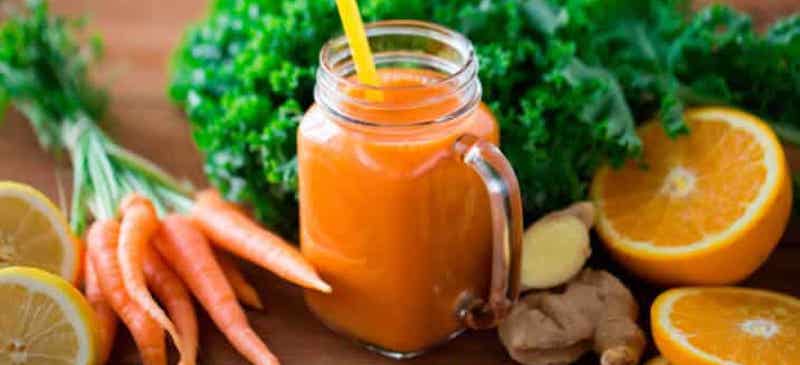
There’s a growing collection of literature that indicates the beneficial effects of beta-carotene and other carotenoids on chronic diseases in humans, which is why getting them into your diet should be a priority.
Beta-carotene is a type of carotenoid that’s found in plants. It’s known as a provitamin A carotenoid because it needs to be converted to active vitamin A by the body.
Researchers agree that beta-carotene found in fruits and vegetables is beneficial to your health since vitamin A foods can help boost your immune system, protect your skin and eyes, and fight life-threatening conditions like heart disease and cancer.
What is beta-carotene?
Beta-carotene is a pigment found in plants that gives yellow and orange fruits and vegetables their color. It’s converted in the body to vitamin A, a powerful antioxidant that plays a critical role in maintaining healthy vision, skin and neurological function.
Vitamin A is found in two primary forms: active vitamin A and beta-carotene. Active vitamin A is called retinol, and it comes from animal-derived foods. This preformed vitamin A can be used directly by the body without needing to convert the vitamin first.
Provitamin A carotenoids are different because they need to be converted to retinol after they’re ingested. Since beta-carotene is a type of carotenoid that’s found primarily in plants, it needs to be converted to active vitamin A before it can be utilized by the body.
Evidence has revealed that eating high-antioxidant foods that contain beta-carotene is good for your health and may help prevent serious conditions. However, there’s mixed research about the use of beta-carotene supplements.
In fact, some studies have even suggested that supplementation may increase your risk of serious health conditions like cancer and heart disease.
The important message here is that there are benefits to getting vitamins in food that don’t necessarily occur in supplement form, which is why eating healthy, whole foods is the best option.
Benefits
1. Has powerful antioxidant activity
Beta-carotene and other carotenoids have antioxidant activities and are valued for their ability to prevent chronic disease. They protect cells from damaging free radicals, which are the primary cause of aging and degeneration.
Studies have shown an inverse relationship between the presence of various cancers and dietary carotenoids or blood carotenoid levels. However, it appears that carotenoids can promote health when taken at dietary levels but may have adverse effects when taken in high doses by people who smoke or who have been exposed to asbestos.
Researchers are still determining the proper doses for carotenoids to be beneficial and not dangerous.
Nonetheless, it’s clear that consuming foods containing beta-carotene and other antioxidants helps lower levels of inflammation and fight oxidative stress within the body.
2. Supports healthy pregnancy
The American Pediatrics Association cites vitamin A as one of the most critical vitamins during a pregnancy diet and while breastfeeding. Vitamin A plays an important role in the healthy development of the fetus and the newborn, with lung development and maturation being particularly important.
It’s also needed for infants and toddlers to build strong immune systems.
Research published in the European Journal of Nutrition noted that there should be a 40 percent increase in vitamin A intake for pregnant women and a 90 percent increase for breastfeeding women.
It’s safest to get beta-carotene from the foods you consume, so women who are pregnant or breastfeeding should consume more yellow and orange fruits and vegetables. If you do need a supplement to get enough of this carotenoid, use it under the supervision of your healthcare provider.
3. Protects skin
Beta-carotene metabolism takes place in a wide variety of organs, including the skin. Many studies have found that it helps prevent the formation of UV-induced erythema, or skin irritation and redness.
Although it can’t be compared to the efficacy of sunscreen, there’s evidence that beta-carotene can protect the skin against sunburn by increasing the basal defense against skin damage caused by UV light.
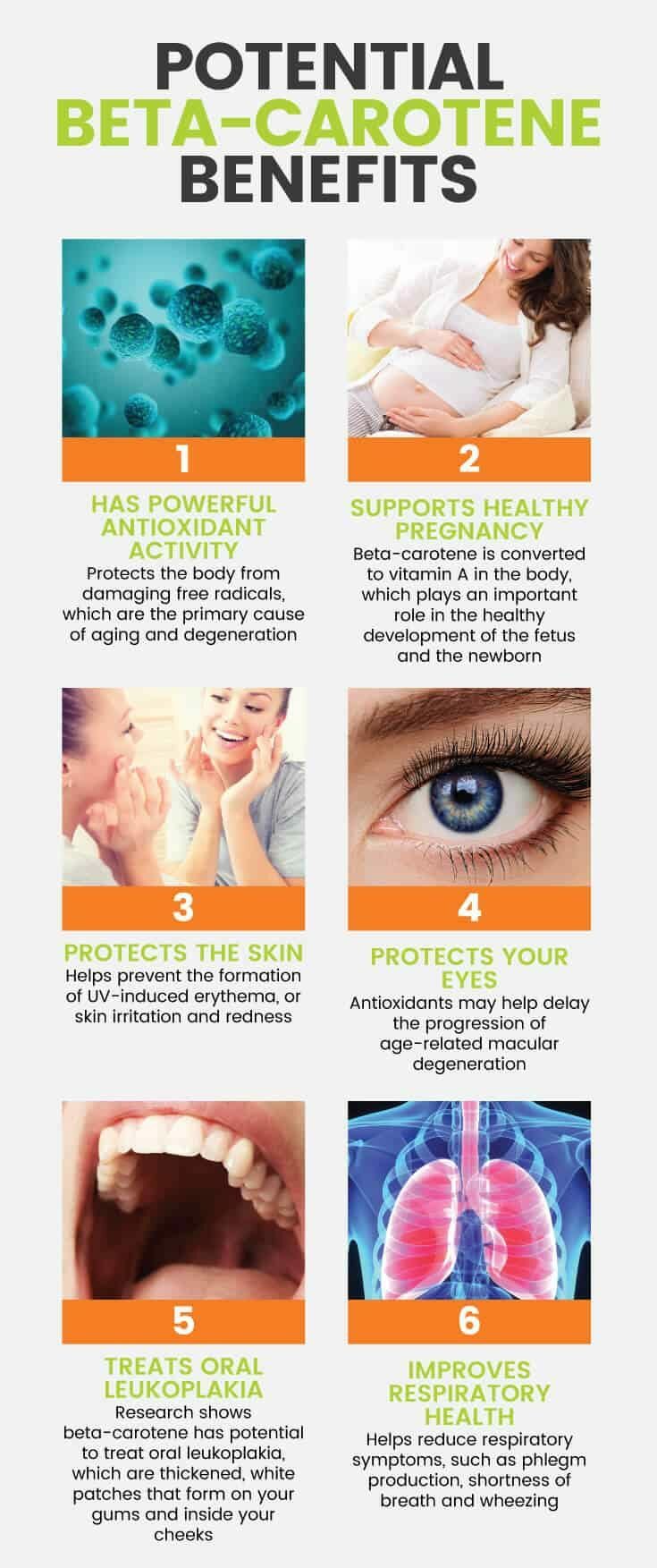
4. Protects eyes
Beta-carotene and other antioxidants may help delay the progression or reduce the risk of age-related macular degeneration, which causes vision changes that are sometimes so severe that irreversible legal blindness can occur. Antioxidants are effective in slowing down the progression of macular degeneration symptoms because they can help prevent oxidative stress, which plays a significant role in the degeneration of cells and nerves in the retina/macula.

The Age-Related Eye Disease Study established that a combination of dietary antioxidants, including eye vitamins zinc, beta-carotene, vitamin C and vitamin E, effectively slowed the progression of macular degeneration.
5. Helps treat oral leukoplakia
A study conducted at the University of Arizona confirmed the efficacy of beta-carotene in patients with oral leukoplakia, which is highlighted by thickened, white patches that form on your gums and inside your cheeks. Most leukoplakia patches are benign, but some may be early signs of cancer.
Fifty patients were given 60 milligrams of beta-carotene a day for six months, and then participants were chosen to either continue treatment or use placebo therapy for 12 additional months. The results showed that 52 percent (26 patients) of the participants had a clinical response to treatment, and 23 of the 26 patients who responded positively completed the second, randomized phase of the study.
Another older study, published in 1990, had similar results: 71 percent of patients in the treatment group had major responses to 30 milligrams of beta-carotene per day. Researchers concluded that because of its lack of toxicity, it serves as an excellent candidate as a preventive agent for oral cancer.
6. Improves respiratory health
Research published in the European Respiratory Journal suggested that eating fruits with beta-carotene can improve respiratory and pulmonary function. In comparison with eating fruit rarely or never, people who ate fruit at least once a day had reduced respiratory symptoms, such as phlegm production, shortness of breath and wheezing.
Fruits of any kind help fight respiratory conditions, including mango, papaya and cantaloupe.
7. Boosts brain function
Because beta-carotene works as an antioxidant, it may fight oxidative stress that contributes to brain aging and reduce the risk of cognitive decline. Although the evidence on this potential benefit is mixed, one study found that long-term supplementation with the antioxidant may provide cognitive benefits.
However, researchers didn’t find that short-term supplementation was effective for boosting brain health. Instead, long-term consumption of colorful fruits and vegetables is the best way to prevent early cognitive decline and ensure that you get the nutrients necessary for proper brain function.
Another large cross-sectional analysis of data from the U.S. National Health and Nutrition Examination Survey investigated associations between dietary beta-carotene intake, assessed via food questionnaires, and performance on three cognitive tests: the CERAD Word‑List learning (memory), Animal Fluency Test and the Digit Symbol Substitution Test.
After adjusting for a wide range of demographic, health and lifestyle confounders, the study found that higher beta-carotene intake was linearly associated with better scores across all three cognitive domains. In other words, individuals reporting greater beta-carotene consumption performed consistently better on memory recall, verbal fluency and processing speed tasks, suggesting a potential protective role of this nutrient in cognitive health.
8. May fight some cancers
There have been studies suggesting that lung cancer, particularly in smokers, and cardiovascular disease may actually be enhanced by supplemental beta-carotene. The results on this issue are mixed, but ultimately, researchers aren’t sure if there may be interactions between different carotenoids that are used together for treatment or if beta-carotene interacts with other phytonutrients.
A meta-analysis published in the International Journal of Cancer supported findings of an increased risk of lung and stomach cancers in smokers and asbestos workers who supplemented with 20 to 30 milligrams of beta-carotene per day. For this reason, researchers believe that beta-carotene supplements should not be recommended for primary cancer prevention.
However, a study conducted at Yale University School of Medicine in 2002 found that high fruit and vegetable consumption, particularly a diet rich in carotenoids, reduced the risk of lung cancer.
Diets high in antioxidants like beta-carotene also may help combat the following cancers, though more research is needed to fully confirm these benefits:
The numerous studies on the subject do agree that people who smoke or drink heavily should not take beta-carotene supplements unless under their doctors’ supervision.
9. Might combat heart disease
Beta-carotene may help combat heart disease by acting as a powerful antioxidant that reduces oxidative stress, a key contributor to the development of atherosclerosis. Its role in neutralizing free radicals can help protect blood vessels and reduce inflammation, both of which are critical in preventing cardiovascular complications.
A study published in the International Journal of Cardiology examined the relationship between serum beta-carotene levels and cardiovascular disease risk in more than 1,000 men aged 45-64. The study found that men with higher levels of beta-carotene in their blood had a significantly lower risk of dying from ischemic heart disease compared to those with lower levels, suggesting a protective role of beta-carotene against heart disease.
Antioxidant foods that contain beta-carotene may also include nutrients like flavonoids and lycopene, which aren’t typically included in standard vitamin supplements, and these compounds also benefit heart health.
Top foods
Numerous observational studies have found that people who ingest more carotenoids in their diets have a reduced risk of several chronic diseases. The richest sources of beta-carotene are yellow and orange fruits and vegetables, plus leafy green vegetables. (The chlorophyll in leafy greens hides the yellow-orange pigment.)
In general, the brighter and more intense the color, the more beta-carotene is present in that food.
The American Heart Association recommends getting enough beta-carotene from a diet high in fruits and vegetables, rather than through supplements.
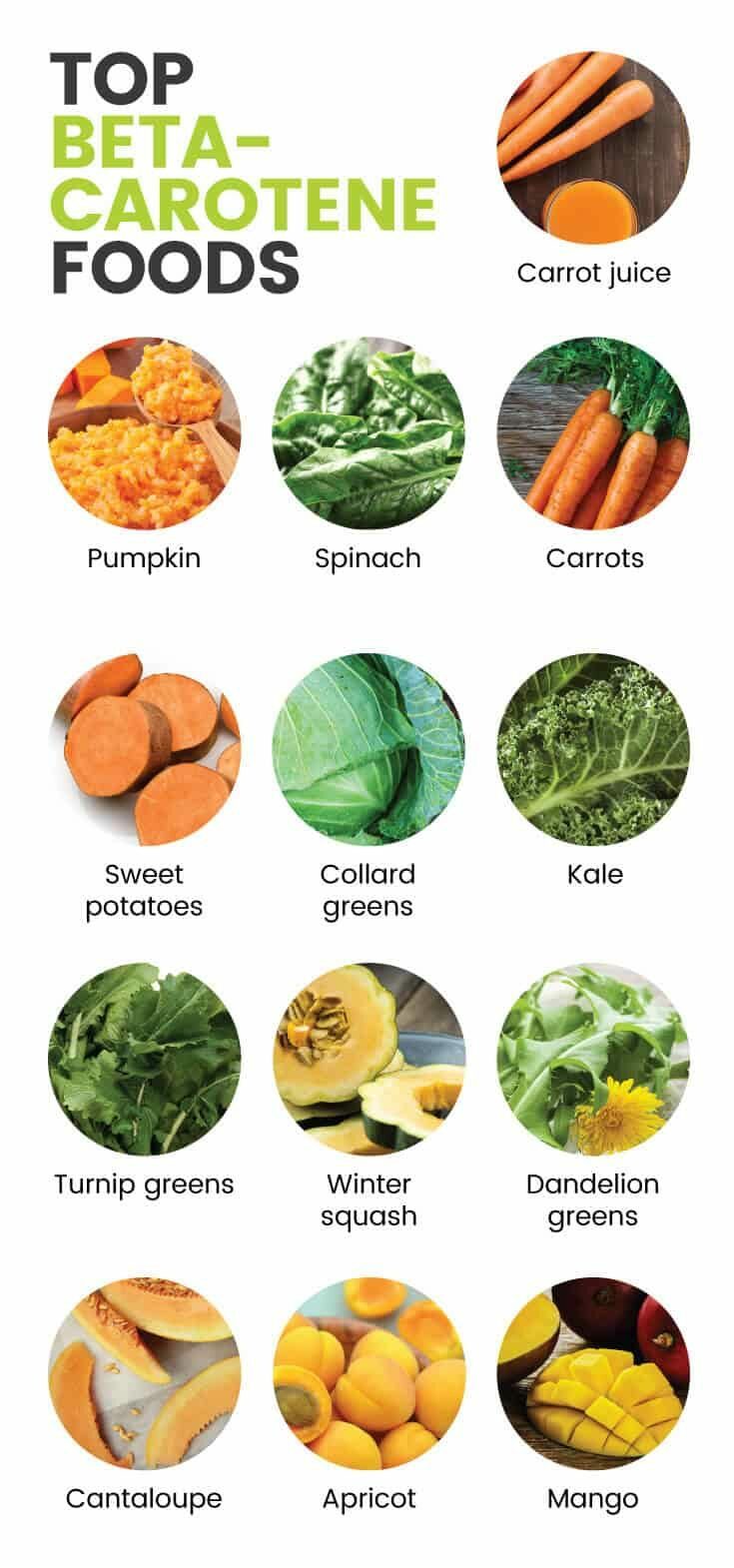
To get about six to eight milligrams a day, eat five or more servings of fruits and vegetables, especially these foods:
- Carrots and carrot juice
- Pumpkin
- Spinach
- Sweet potato
- Collard greens
- Kale
- Turnip greens
- Squash
- Dandelion greens
- Cantaloupe
- Apricot
- Mango
- Cucamelon
- Asparagus
- Broccoli
- Chinese cabbage
- Chives
- Grapefruit
- Onions
- Peas
- Peppers
- Plums
- Romaine lettuce
- Paprika
- Cayenne
- Chili
- Parsley
- Cilantro
- Marjoram
- Sage
- Coriander
- Oregano
Beta-carotene is fat-soluble, so you need to consume fats in order for it to be absorbed properly. You can do this by cooking vegetables containing this carotenoid in coconut oil or olive oil, which also have numerous health benefits.
You can also eat fruits with probiotic yogurt to be sure that it’s properly absorbed.
Dosage
Although it’s ideal to get beta-carotene from the foods you consume, supplements are available in capsule and gel forms. Commercially available supplements typically contain between 1.5 and 15 milligrams of either synthetic or natural beta-carotene.
There’s no recommended daily intake. Because of the mixed research concerning the dangers of beta-carotene supplementation, it’s only recommended for short-term use unless it’s used under the care of your doctor.
Risks, side effects and interactions
Beta-carotene is likely safe when it’s consumed in amounts found naturally in food. Supplements should be used short term under the direction of your healthcare provider.
Possible side effects from this carotenoid include headache, burping, loose stools, bruising, joint pain and yellowing skin, although the discoloration eventually goes away.
People who smoke or drink heavily should avoid taking this carotenoid. Studies show that it causes an increased risk of cancer in smokers and heavy drinkers.
People with a history of exposure to asbestos should also avoid using beta-carotene supplements because they may increase the risk of liver disorder or heart disease.
Tell your doctor if you take beta-carotene supplements while taking cholesterol-lowing drugs, antibiotics, proton pump inhibitors, statins, or lista or plant sterols. It may increase your risk of bleeding when it’s taken with drugs that also increase the risk of bleeding (like blood thinners).
Frequently asked questions
What is beta-carotene used for?
Beta-carotene is a powerful antioxidant and a precursor to vitamin A, meaning your body converts it into vitamin A as needed. It’s used to support healthy vision, skin health and immune function, and it may help protect cells from oxidative stress.
What foods are highest in beta-carotene?
The best food sources of beta-carotene include carrots, sweet potatoes, butternut squash, pumpkin, red and yellow bell peppers, spinach, kale, and other dark leafy greens. Orange and yellow fruits like mangoes and cantaloupe also contain beta-carotene.
Is beta-carotene the same as vitamin A?
Not exactly. Beta-carotene is a provitamin A carotenoid, meaning the body can convert it into active vitamin A (retinol). However, vitamin A from animal sources (like liver) comes in the already active form, whereas beta-carotene must be converted.
Can you take too much beta-carotene?
While beta-carotene from food sources is considered safe, high-dose supplements may be harmful, especially in smokers or former smokers, as some studies have linked excess supplemental beta-carotene to an increased risk of lung cancer in these groups. Too much beta-carotene can also cause carotenemia, a harmless condition that turns the skin orange.
Does beta-carotene help your skin?
Yes. Beta-carotene supports skin health by acting as an antioxidant that helps protect against UV damage and environmental stressors. It also contributes to healthy cell turnover and may improve skin tone and radiance when consumed regularly through diet.
Is beta-carotene good for your eyes?
Absolutely. Beta-carotene plays a key role in maintaining healthy vision.
Once converted to vitamin A, it helps protect the surface of the eyes and supports night vision. It’s also included in formulations aimed at reducing the risk of age-related macular degeneration .
Is beta-carotene safe during pregnancy?
Beta-carotene from food is safe and beneficial during pregnancy, as it supports fetal development and maternal health. However, pregnant women should avoid high-dose vitamin A supplements in the retinol form, as excess retinol can be toxic. Beta-carotene is a safer alternative for supporting vitamin A needs.
Final thoughts
- Beta-carotene is a pigment found in plants that gives yellow and orange fruits and vegetables their color.
- It’s a type of carotenoid. Provitamin A carotenoids like beta-carotene are different because they need to be converted to retinol by the body after they’re ingested.
- Research shows that there are benefits to eating foods containing beta-carotene. This is due to its antioxidant activities and ability to protect the skin and eyes.
- There’s mixed research regarding beta-carotene supplementation and whether or not it increases your risk of cancer and heart disease. To reduce the risk of adverse effects, get your dose of this carotenoid from foods like sweet potatoes, carrots and spinach.
Popular Nutrition Posts