

This Dr. Axe content is medically reviewed or fact checked to ensure factually accurate information.
With strict editorial sourcing guidelines, we only link to academic research institutions, reputable media sites and, when research is available, medically peer-reviewed studies. Note that the numbers in parentheses (1, 2, etc.) are clickable links to these studies.
The information in our articles is NOT intended to replace a one-on-one relationship with a qualified health care professional and is not intended as medical advice.
This article is based on scientific evidence, written by experts and fact checked by our trained editorial staff. Note that the numbers in parentheses (1, 2, etc.) are clickable links to medically peer-reviewed studies.
Our team includes licensed nutritionists and dietitians, certified health education specialists, as well as certified strength and conditioning specialists, personal trainers and corrective exercise specialists. Our team aims to be not only thorough with its research, but also objective and unbiased.
The information in our articles is NOT intended to replace a one-on-one relationship with a qualified health care professional and is not intended as medical advice.
Slow Living: What It Is, Benefits & How to Embrace a More Mindful Lifestyle
August 13, 2025
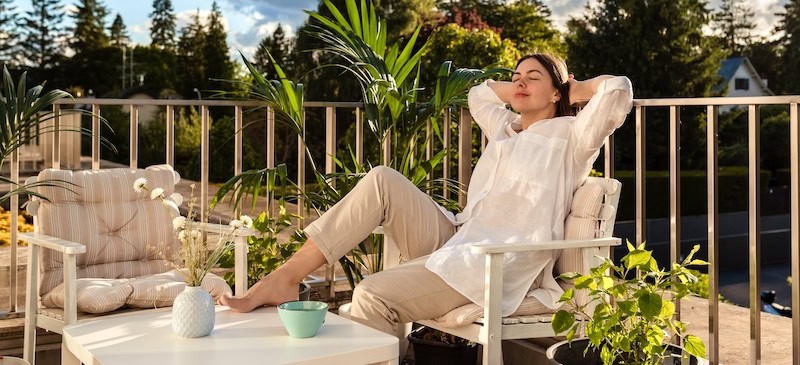
In today’s fast-paced, always-on culture, the idea of slowing down can feel like a radical act. Many people rush from one task to the next, multitasking through meals, scrolling through endless notifications and packing schedules so tightly that rest becomes a luxury. That’s where slow living comes in, a movement that encourages us to intentionally create space, savor moments and focus on what truly matters.
Far from being about laziness or doing less for the sake of it, slow living is about doing things deliberately and mindfully. Whether it’s how you eat, work, travel or connect with others, slow living invites you to live with purpose and presence.
What is slow living?
The slow living philosophy is rooted in the slow movement, which began in the late 1980s in Italy as a reaction to the rise of fast food culture. The movement expanded beyond food into other aspects of life (work, fashion, travel and even parenting) as people realized that “fast” doesn’t always mean “better.”
At its core, slow living is about aligning your life with your values and choosing quality over quantity. It doesn’t necessarily mean you live in the countryside or abandon modern technology. Instead, it’s about creating intentional pauses in your daily rhythm, so you can:
- Savor meals without rushing (mindful eating).
- Spend time with loved ones without distraction.
- Engage deeply in work instead of multitasking.
- Make conscious consumer choices.
In short, slow living is the art of living at a pace that feels right for you, not one dictated by external pressure or societal timelines.

Benefits
1. Can reduce stress and overwhelming feelings
A slower pace allows the nervous system to reset, lowering cortisol levels and helping you feel calmer. With fewer commitments, you can manage your time and energy more effectively.
A study published in 2022 investigated the effects of an eight-week mindfulness-based stress reduction program, which incorporates many principles of slow living, such as intentional pacing, present-moment awareness and mindful breathing. Researchers found that participants experienced significant increases in “time affluence,” or the feeling of having enough time, which was strongly associated with higher overall well-being.
By helping individuals slow down, focus on one task at a time and engage more deeply in daily activities, the program effectively reduced stress levels and feelings of overwhelm, highlighting how adopting slow-living practices can promote a calmer, more balanced state of mind.
2. May improve mental clarity
When you stop rushing from one task to the next, you give your brain time to process, reflect and focus. This can boost creativity, decision-making and overall mental well-being.
A systematic review found that even the early stages of mindfulness training, mirroring techniques central to slow living like focused attention and present-moment awareness, can significantly improve key cognitive functions. Specifically, the review reported that early-phase mindfulness practices are associated with enhancements in selective and executive attention, working memory capacity, and other executive functions, indicating that intentionally slowing down through mindful practices can sharpen mental clarity and cognitive control.
3. Can enhance relationships
Slow living prioritizes connection over convenience. Taking time to have meaningful conversations or shared experiences deepens bonds with friends, family and community.
Research has even indicated that mindfulness, a foundational practice within slow living, can positively influence romantic relationship quality. In a longitudinal study published in Journal of Marital and Family Therapy, researchers found that individuals with higher levels of trait mindfulness experienced greater relationship satisfaction and were better able to respond constructively during relationship stress.
Additionally, participants who demonstrated greater state mindfulness during a conflict discussion showed improved communication quality and more positive shifts in how they perceived their relationships afterward. These findings suggest that by slowing down, being present and cultivating mindfulness, individuals can foster clearer communication, increased emotional responsiveness and stronger relational bonds.
4. Supports sustainable choices
Moving at a slower pace often means making more eco-conscious decisions, from buying fewer, higher-quality goods to supporting local businesses.
A study published in Frontiers in Psychology, for instance, explored the link between mindfulness and ecological behavior, revealing that individuals with higher dispositional mindfulness were more likely to engage in health-promoting actions, such as better nutrition and exercise. Importantly, these healthier habits served as a mediating pathway to more sustainable ecological behaviors, suggesting that cultivating mindful awareness can indirectly foster environmentally conscious choices like sustainable consumption (like a sustainable diet plan) and lifestyle changes.
5. May increase joy and fulfillment
When you take the time to notice the details, such as the aroma of coffee, the sound of rain or the warmth of sunlight, you naturally cultivate gratitude and contentment.
Research published in Frontiers in Psychology examined the effects of mindfulness-based cognitive therapy, a structured program that mirrors slow-living principles like present-moment awareness and deliberate pacing. After an eight-week intervention followed by a two-month follow-up, participants exhibited significant improvements in both subjective well-being (including life satisfaction and positive affect) and eudaimonic well-being, which encapsulates deeper fulfillment and meaning in life.
6. Helps you embrace more time
By intentionally slowing down, you free yourself from the constant feeling of “running late” and begin to see time as something you can shape, not something that controls you.
A study published in Applied Psychology: Health and Well-Being evaluated whether practicing mindfulness may attenuate time pressure and lead to more time affluence. The study found that compared with a physically exercising control group, participation in a mindfulness-based stress reduction program led to increases in time affluence and subjective well-being.
Further, a mediation analysis revealed that the effect of increased mindfulness on subjective well-being is partially mediated through this increase in time affluence. This research suggests that mindfulness practices, which align with the principles of slow living, can help individuals feel they have more time, thereby reducing stress and enhancing overall well-being.
7. Allows you to be more present
Slow living shifts your focus to the here and now, making it easier to fully experience each moment rather than rushing toward the next.
Research published in 2019 analyzed how mindfulness relates to one’s temporal perspective using both correlational and intervention-based methods. The study employed the Five-Facet Mindfulness Questionnaire alongside an extended Zimbardo Time Perspective Inventory in a Swedish sample, further complementing this with mindfulness-based interventions.
The findings showed that higher mindfulness was associated with a more balanced time perspective, characterized by reduced preoccupation with negative past and future thoughts and a clearer orientation toward the present moment. This shift suggests that mindfulness practice, central to the philosophy of slow living, supports moving out of ruminative or anxious mental states to inhabit the present more fully.
8. Encourages stronger connection to nature
When you live at a gentler pace, you’re more likely to spend time outdoors, notice seasonal changes and feel connected to the natural world around you.
A study from 2020 revealed that practicing mindfulness within natural environments significantly enhances individuals’ sense of connection to nature and elevates mood. Participants who engaged in mindfulness exercises outdoors reported higher levels of nature connectedness and more positive affect compared to those who practiced mindfulness in non-natural or indoor settings.
These findings underscore how slow living, through intentional, present-focused engagement with the natural world, can deepen one’s bond with nature and contribute to emotional well-being.
Myths and misconceptions
- Myth 1: Slow living means doing nothing.
Truth: It’s not about inactivity, but intentional activity. You still accomplish goals, just with less haste and more purpose. - Myth 2: You must live in the countryside.
Truth: Slow living can be embraced anywhere, from a bustling city to a quiet rural town, by adjusting your mindset and habits. - Myth 3: It’s anti-technology.
Truth: Technology can be part of slow living when used mindfully, helping you connect, learn and create without becoming a constant source of distraction. - Myth 4: It’s only for the wealthy or retired.
Truth: Anyone, regardless of age or income, can apply slow living principles in everyday life. It’s about choices, not circumstances. - Myth 5: It means being unproductive.
Truth: Slow living often makes you more productive by helping you focus on fewer, higher-priority tasks that align with your goals. - Myth 6: It’s a quick fix.
Truth: Slow living is a gradual lifestyle shift, not an instant solution. Its benefits come from consistent, intentional practice over time.
How to embrace slow living
- Find your why. Clarify why you want to embrace slow living, whether it’s to improve health, deepen relationships or simply feel more at peace. Having a clear reason keeps you committed.
- Start with one area of your life. Choose a single habit to slow down, like your morning routine or how you eat meals, and build from there.
- Set boundaries with your time. Learn to say no to commitments that don’t align with your priorities.
- Limit distractions. Put your phone away during meals, carve out screen-free hours and focus on one task at a time.
- Simplify your surroundings. Decluttering your home and workspace can reduce mental clutter, too.
- Practice mindfulness daily. Even five minutes of deep breathing, journaling, mindfulness meditation or walking in nature can anchor you in the present.
- Reconnect with nature. Spending time outdoors naturally slows your pace and fosters a deeper sense of connection to the world around you.
- Chase your passion. Use your slower pace to make space for hobbies and passions you’ve set aside. Pursuing what lights you up adds meaning to your days.
Frequently asked questions
Is slow living the same as minimalism?
Not exactly. Minimalism focuses on owning fewer possessions, while slow living is about pacing your life intentionally. They can overlap, but they’re not identical.
How do I practice slow living if I have a busy job?
You can integrate slow living into small moments, like savoring lunch without screens or setting aside time for deep work without interruptions.
Does slow living mean I can’t have ambitious goals?
Not at all. Slow living can actually make you more productive by helping you focus on fewer, more meaningful goals at a time.
Is slow living realistic for parents?
Yes, and it may even be more beneficial, as it encourages presence and quality time with children, rather than rushing through routines.
Conclusion
- Slow living is not about rejecting modern life; it’s about reclaiming it.
- By choosing to live with intention, presence and purpose, you can create a lifestyle that supports your well-being, strengthens relationships and fosters a deeper connection to the world around you.
- Whether you start by simplifying your schedule, savoring your meals or unplugging from devices, each small shift toward a slower pace can lead to lasting changes in how you experience life.
- In a world that glorifies speed, slow living is a gentle but powerful reminder that life isn’t a race; it’s meant to be lived fully.